Complete IPTV Guide: Features, Benefits & Setup Explained 2026
The way people watch television has changed dramatically over the last decade. Instead of relying on traditional cable or satellite services, millions of viewers now choose Internet Protocol Television (IPTV Guide) for its flexibility, affordability, and wide range of entertainment options. Whether you enjoy live sports, international channels, movies, TV series, or on-demand content, IPTV offers a modern viewing experience that works across multiple devices.
If you’re new to IPTV or considering switching from conventional television services, this guide explains everything you need to know. You’ll learn how IPTV works, its key features, major benefits, setup process, and important factors to consider before choosing a provider. Whether you’re looking for international programming or searching for IPTV Portugal solutions that support Portuguese channels and local content, understanding the basics helps you make an informed decision.
What Is IPTV?
IPTV stands for Internet Protocol Television, a technology that delivers television content through an internet connection rather than traditional cable, satellite, or terrestrial broadcasting.
Instead of receiving signals through coaxial cables or satellite dishes, IPTV streams digital content directly over broadband internet. This allows users to access live television, movies, TV shows, catch-up programming, and video-on-demand (VOD) from virtually anywhere with a stable internet connection.
Unlike traditional TV services that follow fixed schedules, IPTV gives viewers greater flexibility by allowing them to watch content whenever and wherever they choose.
How IPTV Works
IPTV delivers digital content using internet protocols. Here’s a simple breakdown of the process:
- TV channels and media are stored on secure streaming servers.
- The provider encodes content into digital streams.
- The content travels through your internet connection.
- Your IPTV application or compatible device receives and decodes the stream.
- The video plays almost instantly on your screen.
Because IPTV uses internet technology, viewers can enjoy television on Smart TVs, smartphones, tablets, computers, streaming devices, and Android TV boxes.
Main Types of IPTV Services
Live Television
Live IPTV streams television channels in real time, just like traditional broadcasting.
Popular categories include:
- News
- Entertainment
- Sports
- Kids channels
- Music
- Documentaries
- International programming
Video on Demand (VOD)
VOD libraries allow users to watch movies and television shows whenever they want.
Catch-Up TV
Catch-Up TV lets users watch programs they missed earlier.
Many IPTV services keep recently aired content available for several days, making it easier to stay current with favorite shows.
Time-Shift Television
Time-shift features pause, rewind, or replay live television.
This functionality is especially useful during sports events or important broadcasts.
Key Features of Complete IPTV Guide
Modern IPTV services include many features that improve the viewing experience.
High-Definition Streaming
Most providers support:
- HD
- Full HD
- 4K Ultra HD (where available)
Image quality depends on internet speed and the original broadcast resolution.
Multi-Device Compatibility
IPTV works on numerous devices including:
- Smart TVs
- Android TV
- Fire TV Stick
- Android phones
- iPhones
- Tablets
- Windows PCs
- Mac computers
- MAG devices
- IPTV boxes
This flexibility allows users to watch content wherever they prefer.
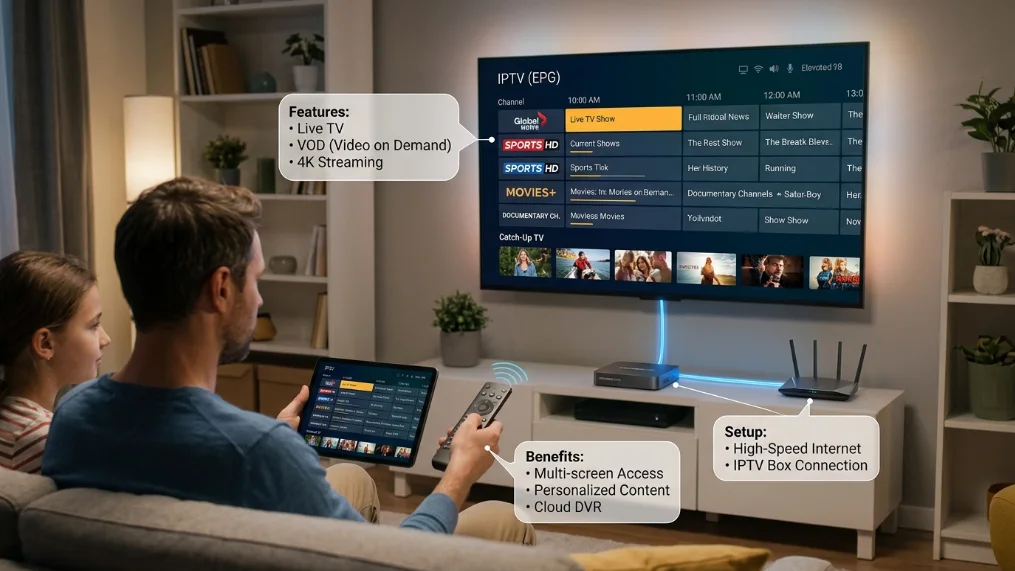
Electronic Program Guide (EPG)
An Electronic Program Guide provides:
- Current programs
- Upcoming schedules
- Channel information
- Easy navigation
This creates a familiar television experience similar to traditional cable.
Large Content Libraries
Many IPTV platforms offer thousands of live channels alongside extensive movie and TV series collections.
International viewers often appreciate regional programming, including options such as iptv portugal, which can provide convenient access to Portuguese-language entertainment and local television content.
Cross-Platform Support
Many IPTV applications synchronize viewing across multiple devices, allowing users to continue watching from where they left off.
Benefits of IPTV
Greater Flexibility
One of IPTV’s biggest advantages is freedom.
Instead of watching television only at home, users can enjoy content on multiple devices wherever internet access is available.
Wide Content Selection
Many IPTV platforms combine:
- Local channels
- International television
- Sports
- Movies
- Documentaries
- Kids programming
- Lifestyle channels
This creates a more personalized entertainment experience.
On-Demand Convenience
Unlike scheduled television broadcasts, IPTV allows viewers to watch many programs at their preferred time.
This flexibility suits busy lifestyles.
Better User Experience
Modern IPTV apps include features such as:
- Search functions
- Favorites lists
- Playback controls
- Personalized recommendations
- Easy navigation
Frequent Content Updates
Many providers regularly expand their channel lineup and media libraries, giving subscribers fresh content throughout the year.
Internet Requirements
A reliable internet connection is essential for smooth IPTV streaming.
Recommended speeds include:
| Streaming Quality | Recommended Speed |
|---|---|
| SD | 5 Mbps |
| HD | 10 Mbps |
| Full HD | 20 Mbps |
| 4K UHD | 30–50 Mbps |
Using wired Ethernet connections often provides the most stable performance, although strong Wi-Fi networks also work well.
Devices Compatible with IPTV
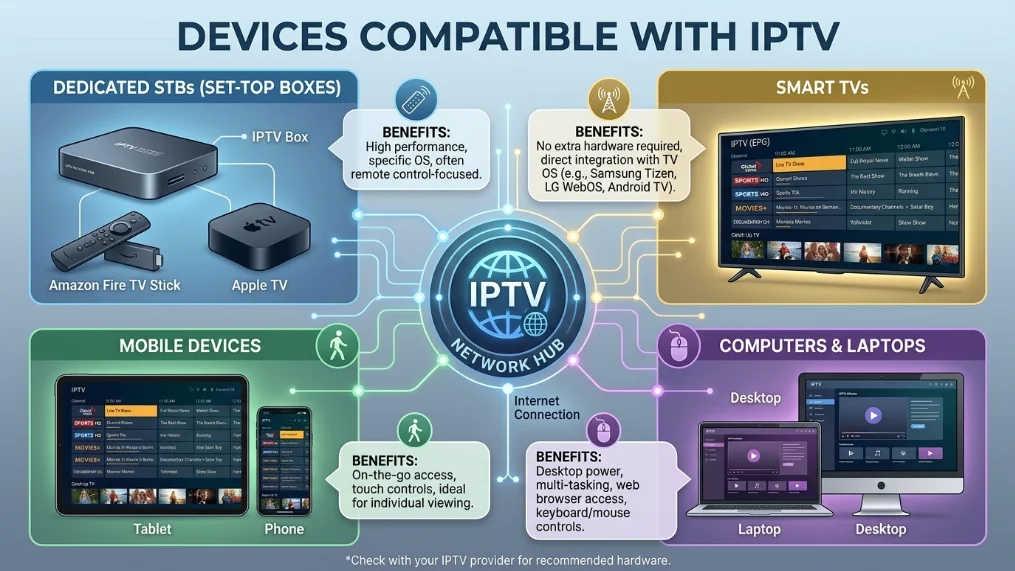
Most IPTV subscriptions support popular platforms including:
- Samsung Smart TV
- LG Smart TV
- Android TV
- Google TV
- Fire TV Stick
- NVIDIA Shield
- Apple TV
- Android smartphones
- iPhone
- iPad
- Windows
- macOS
- Linux
- Chromecast
This broad compatibility eliminates the need for specialized television hardware.
How to Set Up IPTV
Setting up IPTV is usually straightforward.
Step 1: Choose a Reliable Provider
Select a provider that offers:
- Stable servers
- Good customer support
- High-quality streaming
- Compatible applications
Step 2: Install an IPTV Player
Popular IPTV players include:
- IPTV Smarters
- TiviMate
- XCIPTV
- GSE Smart IPTV
- IBO Player
Step 3: Enter Your Subscription Details
Depending on your provider, you’ll receive one of the following:
- M3U Playlist
- Xtream Codes Login
- Portal URL
Enter these details into your IPTV application.
Step 4: Load Channels
The application downloads:
- Live TV channels
- Movies
- TV series
- Electronic Program Guide
Step 5: Start Watching
Once everything loads successfully, you can begin enjoying your favorite content.
IPTV for International Viewers
One reason IPTV continues to grow is its ability to provide international programming.
Many viewers living abroad want convenient access to channels from their home country. For example, users interested in IPTV Portugal often look for services that include Portuguese news, sports, entertainment, and regional programming, allowing them to stay connected with familiar content while living elsewhere.
Tips for Choosing an IPTV Provider
Not every IPTV service delivers the same experience.
Consider these factors before subscribing:
- Stable streaming performance
- Minimal buffering
- Responsive customer support
- Device compatibility
- Easy installation
- High-quality video
- Regular updates
- Clear subscription options
Taking time to evaluate these features helps ensure a smoother viewing experience.
Common IPTV Questions
Does IPTV Require a Smart TV?
No.
IPTV works on many devices, including streaming sticks, Android boxes, smartphones, tablets, and computers.
Can Multiple Devices Be Used?
Many providers allow multiple compatible devices, though the number of simultaneous streams depends on the subscription plan.
Does IPTV Work While Traveling?
Since IPTV relies on internet connectivity, users can often access their content while traveling, provided they have a stable connection and the service supports their location.
Why Does Buffering Occur?
Buffering may result from:
- Slow internet speeds
- Weak Wi-Fi signals
- Network congestion
- Device performance limitations
- Server issues
A faster, more stable internet connection generally improves playback.
Best Practices for a Better IPTV Experience
To maximize streaming quality:
- Use high-speed broadband.
- Connect via Ethernet when possible.
- Keep your IPTV application updated.
- Restart your device periodically.
- Close unnecessary background apps.
- Choose compatible streaming hardware.
- Maintain a stable home network.
These simple practices can significantly improve viewing performance.
Final Thoughts
IPTV has transformed how people access television by combining live channels, on-demand entertainment, and multi-device compatibility into a single, internet-based solution. Its flexibility, convenience, and broad content selection make it an appealing option for viewers seeking an alternative to traditional television services.
Whether you’re interested in live sports, blockbuster movies, international programming, or regional entertainment like IPTV Portugal, IPTV offers a modern way to enjoy content across nearly any connected device. By choosing a reliable provider, ensuring a stable internet connection, and using a compatible IPTV player, you can enjoy a smooth and flexible streaming experience tailored to your viewing preferences.